


Fire Extinguisher Servicing Requirements In Australia: What Building Owners & Managers Need to Know
Quick Summary
As a building owner, facility manager or strata committee member in Australia, you know that having fire extinguishers on site isn’t enough. What really matters are fire extinguishers that will work when needed. This article outlines your legal obligations and provides a step-by-step guide to help you achieve compliance.
Table Of Contents
Why Fire Extinguisher Servicing Matters
A commonly cited Australian industry statistic, which has also been referenced in US academic research, indicates that more than 95 % of all fires are extinguishable if the correct fire extinguisher is used promptly.
From a compliance perspective:
- Fire extinguishers are a crucial part of the essential fire safety equipment required under the Building Code of Australia (BCA) and the relevant state/territory fire safety legislation.
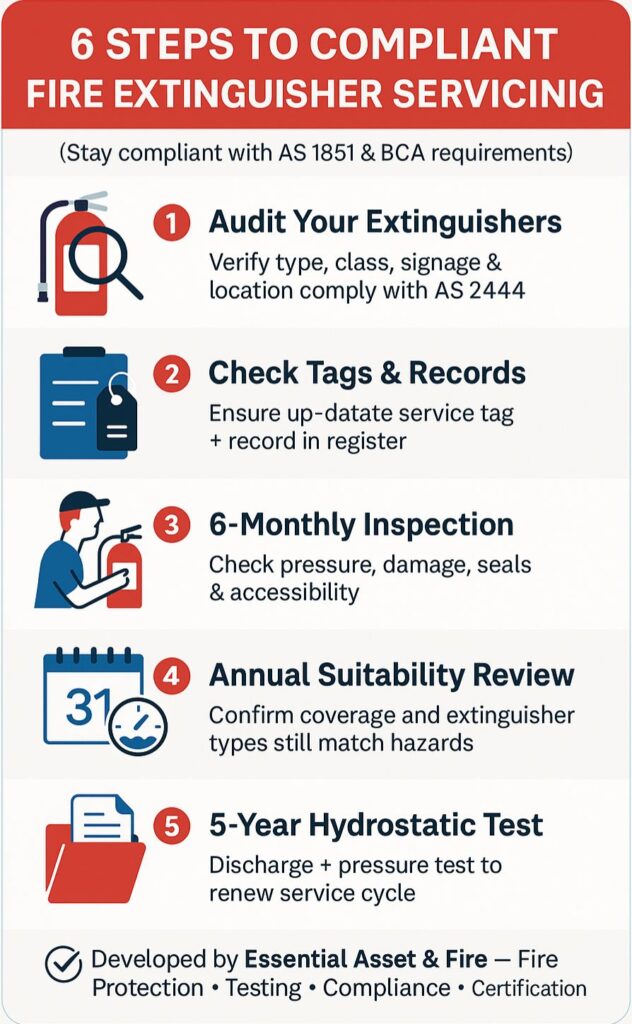
- The servicing and maintenance of portable extinguishers is governed by AS 1851-2012 (or its successor when released) and relevant standards such as AS 2444 (Selection & Location of Portable Fire-Extinguishers and Fire Blankets) for type and placement.
Therefore, as a building owner or manager, you are responsible for ensuring your extinguishers are correctly serviced and that you can demonstrate it (via tags, records, and servicing history), in the event of an audit, insurer review or incident.
Key Standards & Legal Obligations In Australia
AS 1851-2012 – Routine Service Of Fire Protection Systems & Equipment
The bedrock standard for fire-extinguisher servicing is AS 1851-2012 (Routine service of fire protection systems and equipment).
- It sets the minimum service frequencies (6 monthly, yearly, 5-yearly etc) for various equipment
- It requires records and tags to show servicing history and next due dates.
- Some components (e.g., pressure vessels for extinguishers) require hydrostatic testing every 5 or more years
- It is the reference standard that auditors, insurers and fire authorities will refer to when assessing compliance
Table Of Key Standards
| Standard | Title | Key Relevance |
| AS 1851:2012 | Routine Service of Fire Protection Systems & Equipment | Core standard for extinguisher servicing intervals |
| AS 2444:2001 | Selection & Location of Portable Fire Extinguishers and Fire Blankets | Placement, signage, accessibility |
| BCA / NCC | Building Code of Australia | Mandates essential fire safety measures |
| State/Territory EFSM Laws | e.g. NSW EP&A Regulations, QLD Building Fire Safety Regulation 2008 | Legal basis for inspections & fire safety statements |
Ready To Discuss Your Requirements?
Our Experts Look Forward To Hearing From You!
Building Code Of Australia & State/Territory Fire Safety Legislation
In addition to the standard, extinguishers must meet the BCA requirements for the provision of fire-safety systems in Class 2-9 buildings (commercial, residential strata, public buildings). The BCA, within its National Construction Code, commonly references AS 2444 for the selection and location of extinguishers.
State and territory jurisdictions also impose duties on building owners to maintain “essential fire safety measures” (EFSM) and issue Fire Safety Statements, where applicable.
Important Notes On Upcoming Changes
It’s worth noting that change is on the horizon. The standard AS 1851 has updates scheduled and any new version will affect servicing regimes. For example, one resource explains that an update “AS1851-12” is expected to take effect from 13 February 2026 with changes to maintenance practices.
In practice: Building owners should keep abreast of these changes, which may affect servicing intervals, documentation requirements and compliance obligations.
Servicing Intervals: What You Must Do & When
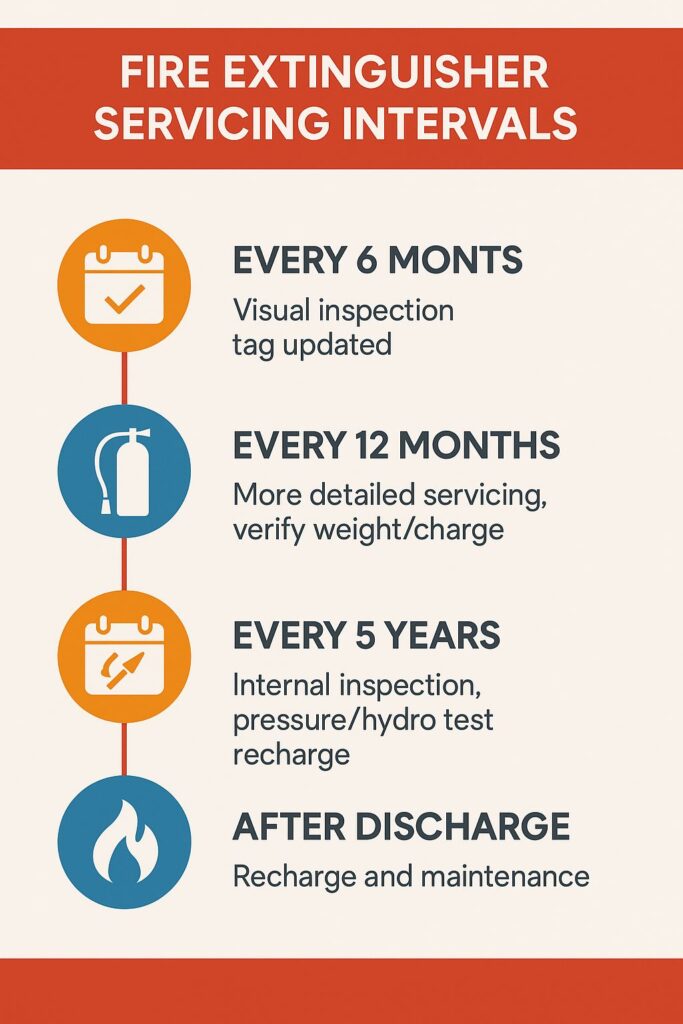
Here’s a detailed breakdown of the servicing intervals relevant to fire extinguishers in Australia under AS 1851-2012 and industry best-practice.
Every 6 Months
- Visual inspection every six months by an accredited person, checking that extinguishers are:
- In correct location
- Accessible & not obstructed
- The pin & tamper seal are intact
- Pressure gauge (if fitted) is in green
- Hose/nozzle not blocked
- No obvious corrosion or damage.
- Although some sources say monthly visual checks may also be done (as part of building-maintenance rounds) the regulated servicing frequency for extinguishers per AS 1851 is six monthly
- Tag/label must be updated to record the date of inspection and next due date
Every 12 Months
- Some extinguishers require an annual service (or Level 2) which may include more detailed checks than the six-monthly
- The annual servicing typically involves:
- All 6 monthly inspection item requirements
- Verifying weight/charge (for those without a gauge)
- Confirming the extinguisher is still appropriate for the hazard
Every 5 Years (Replacement or Pressure Test / Refill)
- Most disposable or rechargeable extinguishers must undergo a 5-year check where the cylinder is emptied, opened, internally inspected, recharged and hydrostatically pressure-tested if required
- If any extinguisher has been partially or fully discharged, the five-year cycle restarts
Servicing Intervals Summary Table
| Interval | What happens | Responsible Party |
| Every 6 Months | Visual Inspection, Correct Accessibility Assessed, Applicable Remedial action Taken & Tag Updated | Accredited Service Provider |
| Every 12 Months | Visual Inspection, Correct Accessibility Assessed, Applicable Remedial action Taken & Tag Updated | Accredited Service Provider |
| Every 5 Years | Detailed Inspection & Replace or Recharge | Accredited Service Provider |
Record‐keeping
Each extinguisher must carry or be accompanied by a tag or label showing the service date, next due date, what work was done, and by whom. Building owners should retain servicing records (digital or print) for at least 7 years in many cases, both for audit readiness and insurance compliance.
Ready To Discuss Your Requirements?
Our Experts Look Forward To Hearing From You!
What Building Owners Must Know: Compliance & Practical Considerations
Ensure You Have the Correct Number & Type of Extinguishers
Compliance isn’t just about service intervals, you must first ensure the right extinguishers are installed, in the correct locations and appropriate for the fire hazard. Standards such as AS 2444 cover selection, location and mounting.
A building audit by a specialist (such as Essential Asset & Fire), can verify that you are compliant from the outset.
Accessibility & Visibility
Extinguishers must be mounted in visible, unobstructed positions, at the correct height (typically no more than 1.2 m from the floor for handheld units) and within a relevant travel distance (e.g., typically no more than 15 metres) for occupants.
Common non-compliance issues include extinguishers being blocked by stored goods, removed from brackets, tags missing or not updated and incorrect extinguisher types being used for the local hazards.
Engage Competent Service Providers
Testing and servicing must be done by qualified, accredited service providers.
Building owners should check that their service provider holds the relevant accreditation, insurance, provides tagged reporting and meets AS 1851 requirements. The NSW Government provides guidance on what the relevant accreditations are if you are unsure.
Tagging, Reporting & Audit Readiness
Every service visit should result in:
- A tag on the extinguisher (or bracket) with service date and next due date
- Detailed service report (especially for 5-year/hydro services) that the building owner retains
- Entry into the building’s fire-safety register or log. Failure to maintain these records can expose a building owner to compliance risk, insurer refusal, or fines in case of a fire.
Moreover, in the event of a fire and insurance claim, the insurer may question whether the extinguisher’s servicing regime was up to date and a documented servicing history is your best protection.
The Cost of Non-Compliance
The cost of failing to service extinguishers isn’t just financial fines, it’s potential loss of life, injury, property damage, business interruption and reputational risk. Non-compliance can also lead to penalties under workplace health & safety (WHS) laws in different jurisdictions.
Given that it is reported over 95% of fires are extinguishable if the correct extinguisher is used promptly, you don’t want to rely on chance.
Australian Statistics & Risk Context
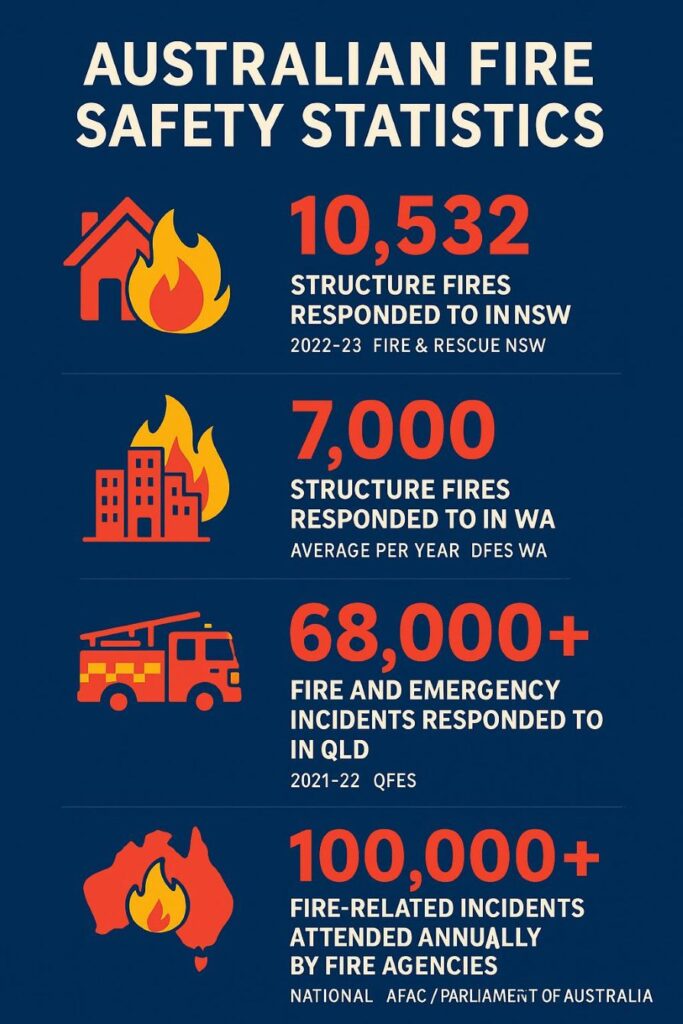
- According to Fire & Rescue NSW they responded to 20,727 fire incidents 2023/24
- A commonly cited Australian industry statistic, indicates that more than 95 % of all fires are extinguishable if the correct fire extinguisher is used promptly
- The fact that many building owners neglect the servicing intervals, documentation and accessibility of extinguishers significantly raises risk
- As a building owner, you must view servicing as part of your risk-mitigation strategy, not just a compliance tick-box
Ready To Discuss Your Requirements?
Our Experts Look Forward To Hearing From You!
Step-by-Step Guide for Building Owners
Here is a practical workflow you can follow to ensure your extinguishers are fully serviced and compliant:
Step 1: Conduct a Baseline Audit
- Engage an accredited fire-safety specialist (e.g. Essential Asset & Fire) to survey your building
- Verify that you have the correct number, type, and class of extinguisher for each hazard
- Check locations, accessibility, signage, mounting height, and any obstructions
- Review the current servicing tags and servicing history (who did it, when, what was done)
- Identify any missing or overdue servicing or tags
Step 2: Implement a Servicing Schedule
- For all extinguishers in your building, establish a schedule: 6-monthly inspection, annual and 5-year overhaul
- Use a digital calendar or maintenance-platform reminder (or outsource to your provider) to avoid missed dates
- Assign responsibility (facility manager or contracted provider) for each interval
Step 3: Contract a Qualified Service Provider
- Choose a provider with accreditation, insurance, ability to supply tags and reports
- Insist on compliance with AS 1851-2012 (or latest version), and that they will provide documentation
- Request they log all work in a way you can track (digital records, dashboard, PDF reports)
- Ask for a copy of their accreditation/licensing and proof of insurance
Step 4: Maintain Documentation & Tagging
- Ensure each extinguisher has a tag showing the last service date and next due date
- Retain all service reports (especially 5-year tests, pressure/hydro-tests)
- Keep a central “fire-equipment register” for your building
- At the annual review, check the register and make sure no units are missing, overdue or untagged
Step 5: Review Before Renewal of Insurance / Compliance Audit
- When your building insurance policy is up for renewal or a fire-safety audit is scheduled, pull your extinguishers’ servicing records and check they are up to date
- If any service intervals have lapsed or tags are missing, schedule immediate servicing
- Use the records to demonstrate to your insurer or regulator that you follow best practice
Step 6: Educate Staff, Occupants & Tenants
- Provide basic training to staff or occupants on the correct extinguisher types, how to use them (aim at base of fire, sweep motion), and ensure visibility of extinguishers
- Encourage occupants to check that extinguishers are not obstructed, pins/seals intact, and to report any suspected discharge or damage
- Combine with routine fire-safety drills so that extinguishers are part of your overall fire-emergency plan
Final Thoughts
If you own or manage a building in Australia, it’s not enough to simply have fire-extinguishers. You must ensure they are correctly located, regularly serviced, properly documented, and ready for action. Complying with standards such as AS 1851-2012 and following best-practice intervals (6 month, 12 month and 5 year inspections), is not just a regulatory tick-box, it’s a vital part of your risk-management framework.
With over 95 % of manageable fires extinguishable if handled early and correctly, your servicing program can make the difference between a small incident and a major loss.
GET IN TOUCH
Schedule A FREE Discovery Call
Frequently Asked Questions (FAQ)
A: Under AS 1851-2012 – Routine Service of Fire Protection Systems and Equipment, portable fire extinguishers must be visually inspected every six months, with more detailed servicing annually, and pressure/hydrostatic testing with replacement if justified every five years. These intervals ensure extinguishers remain fully functional and compliant with the Building Code of Australia (BCA) and state fire-safety laws.
A: A six-monthly inspection involves checking the pressure gauge, tamper seal, safety pin, hose condition, accessibility, and ensuring the extinguisher hasn’t been damaged. An accredited technician should then update the service tag and record the inspection in the fire-safety register.
A: Only an accredited fire-protection technician can service and certify fire extinguishers under AS 1851-2012, building owners should verify that providers hold FPAA accreditation, current public liability and professional indemnity insurance.
A: If an extinguisher has been used, even partially, it must be recharged and serviced immediately or replaced, depending on the type.
A: Service and inspection records should be retained for at least seven years (industry best practice) or longer if specified by your insurance policy. Records may include service tags, digital logs, invoices, and technician reports, which must be presented during audits or insurer requests.
A: AS 2444:2001 – Portable Fire Extinguishers and Fire Blankets (Selection & Location) sets the rules for correct extinguisher type, height, signage, and travel distance (typically ≤ 15 m from likely fire source). It ensures extinguishers are accessible and matched to the class of fire risk (A, B, C, D, E, F).
A: Penalties vary by jurisdiction but can include significant fines, regulatory non-compliance notices, or insurance claim rejection if extinguishers are found unserviceable during an incident. More importantly, non-functional extinguishers can result in avoidable injury, property loss and fatalities.
A: Yes. In New South Wales, for example, extinguishers are listed as an essential fire-safety measure in the AFSS. An accredited practitioner (Fire Safety Assessor) must verify that extinguishers have been maintained per AS 1851 before the certificate is lodged with the local council and NSW Fire & Rescue.
Important Disclaimer: This article is general in nature and does not constitute legal or building compliance advice. Always consult a licensed fire safety practitioner and review relevant legislation for your property classification.
References:

Fire Hydrant Maintenance Requirements For Strata Buildings

How Often Do Fire Hydrants Need To Be Tested

Request a Free Quote
Get a no-obligation quote today—fast, easy, and completely free!